
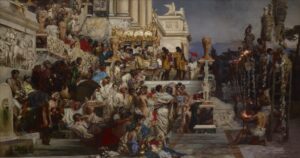
The Roman Candle Execution: Did Nero Burn Christians Alive?
The Great Fire of Rome in AD 64 remains one of the most infamous disasters in Roman history. It destroyed large sections of the imperial capital during the reign of …
The Great Fire of Rome in AD 64 remains one of the most infamous disasters in Roman history. It destroyed large sections of the imperial capital during the reign of …
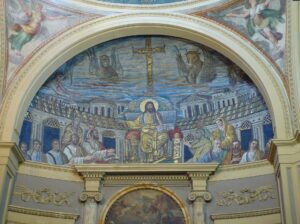
The Roman Empire was not inherently opposed to religious diversity. Across its vast territory, Romans encountered and incorporated an extraordinary range of gods, rituals, priesthoods, and foreign cults. Egyptian Isis …
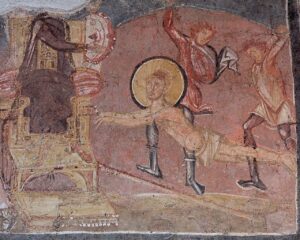
The Diocletianic Persecution, also known as the Great Persecution, was the Roman Empire’s final major attempt to suppress Christianity through imperial law. Beginning in 303 CE and continuing in parts …
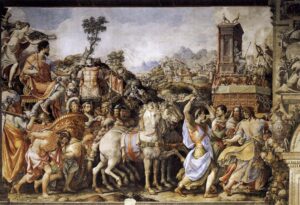
One of the most famous traditions concerning an evocatio is associated with the destruction of Carthage in 146 BC. The evidence, however, is much later than the event itself, and scholars continue …

Magic in the ancient world was not seen as fiction but as an everyday part of life. People believed that unseen forces shaped their health, their crops, and even the outcome of …

The Roman Empire faced many challenges during the third century, nearly collapsing from pressure on its borders and internal struggles. After years of turmoil, a period of more stable government …

The Catholic Church, with its nearly 2,000-year history, stands as one of the most enduring institutions in the world. Followers of this faith consider Catholicism to be a direct continuation …

In February 303, the Roman Empire took a drastic step against Christianity with Emperor Diocletian’s edict. This decree ordered the closure of all churches, the burning of sacred Christian texts, …

Good Friday is an opportunity to explore the complex history surrounding the crucifixion of Jesus. This day is often seen in a very straightforward way, but there’s much more when …

In the ancient world, the sun held a divine status, revered by both Greeks and Romans. Greeks worshipped it as Helios, who journeyed across the sky each day. In Roman …

In the fourth century, a major transformation unfolded in the Roman Empire, significantly shaping the course of Western civilization. This pivotal change was rooted in the actions of Emperor Constantine …

In 107 AD, the Roman Empire was at its peak under Emperor Trajan. Trajan’s leadership led to Rome spanning an impressive 2 million square miles, reaching from Britannia to Syria. …

In the summer of 310, Constantine experienced a life-changing vision that would set the course of his rule and impact the future of Christianity. He witnessed a celestial message, illuminated …

In the ancient realm of Rome, the deities held a mighty influence over the lives of its people. At the top of this divine hierarchy was Jupiter, the powerful god …